

Real-time fleet monitoring that saves you time and money
Optimize the management of your fleet with our vehicle geolocation solution. Reduce costs, improve productivity, and improve safety with real-time tracking, personalized alerts, and trip history. Benefit from advanced tools for effective and responsive management of your teams and vehicles.

More than 8,000 businesses and public organizations trust us to reduce costs, improve efficiency and save time every day.


Vehicle geolocation: get lots of advantages!
Optimize the management of your fleet with our solution of geolocation of corporate vehicles. Reduce costs, improve productivity, and improve safety with real-time tracking, personalized alerts, and trip history. Benefit from advanced functionalities for effective and responsive management of your teams and vehicles.

Cut costs significantly
Save up to 20% on user costs (fuel, maintenance, tyres, etc.) thanks to intelligent route optimization and alerts for non-compliant activity.

Unparalleled security in all circumstances
Protect your vehicles and assets 24/7 with numerous customizable alerts.
Remotely immobilize your vehicles in case of suspicious movement.

Direct connection with ANTAI
The direct connection to the ANTAI (National Agency for Automated Crime Processing) makes it possible to designate drivers easily, as soon as the violation notification is received.

Interview management and more...
The OPTIMUM geolocation solution includes automated interview management. It also makes it possible to manage the assignments of vehicles to drivers.
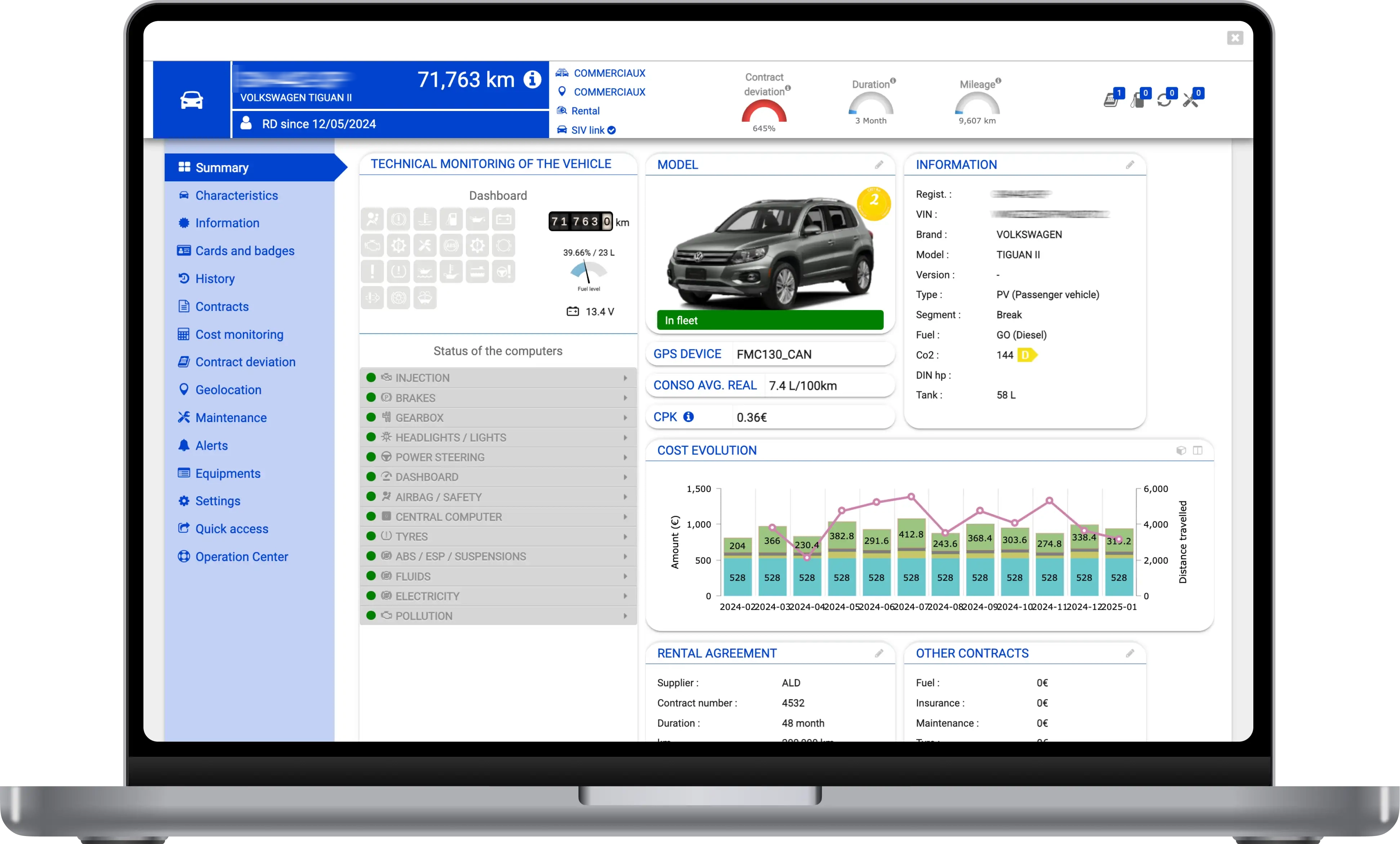
Real-time tracking and trip history
Real-time geolocation allows you to precisely track vehicle movements, optimize routes and reduce fuel costs. Access to trip history makes it easier to analyze performance, identify inefficiencies and implement optimization strategies. It also improves the management of working hours and increases driver safety.

Real-time position and status of the vehicle (On/Off, journey in progress, direction, stopping time...)
Detailed trip history with accurate timestamp
Driver's license check
Vehicle data: registration, mileage, energy level, driver...

Geofencing and corridoring
Geofencing offers precise and automated control of your vehicle fleet. Define virtual zones and receive alerts when entering or leaving the perimeter, thus optimizing vehicle safety and the management of time spent in the area. Follow the movements in real time and ensure that the planned routes are respected thanks to corridoring. In the event of unauthorized use, you are immediately notified, thus limiting the risks of fraud or theft.
Unlimited creation of surveillance zones
KML file integration
Real-time alerts in case of entry and/or exit from zone
Report on the time spent in the zones

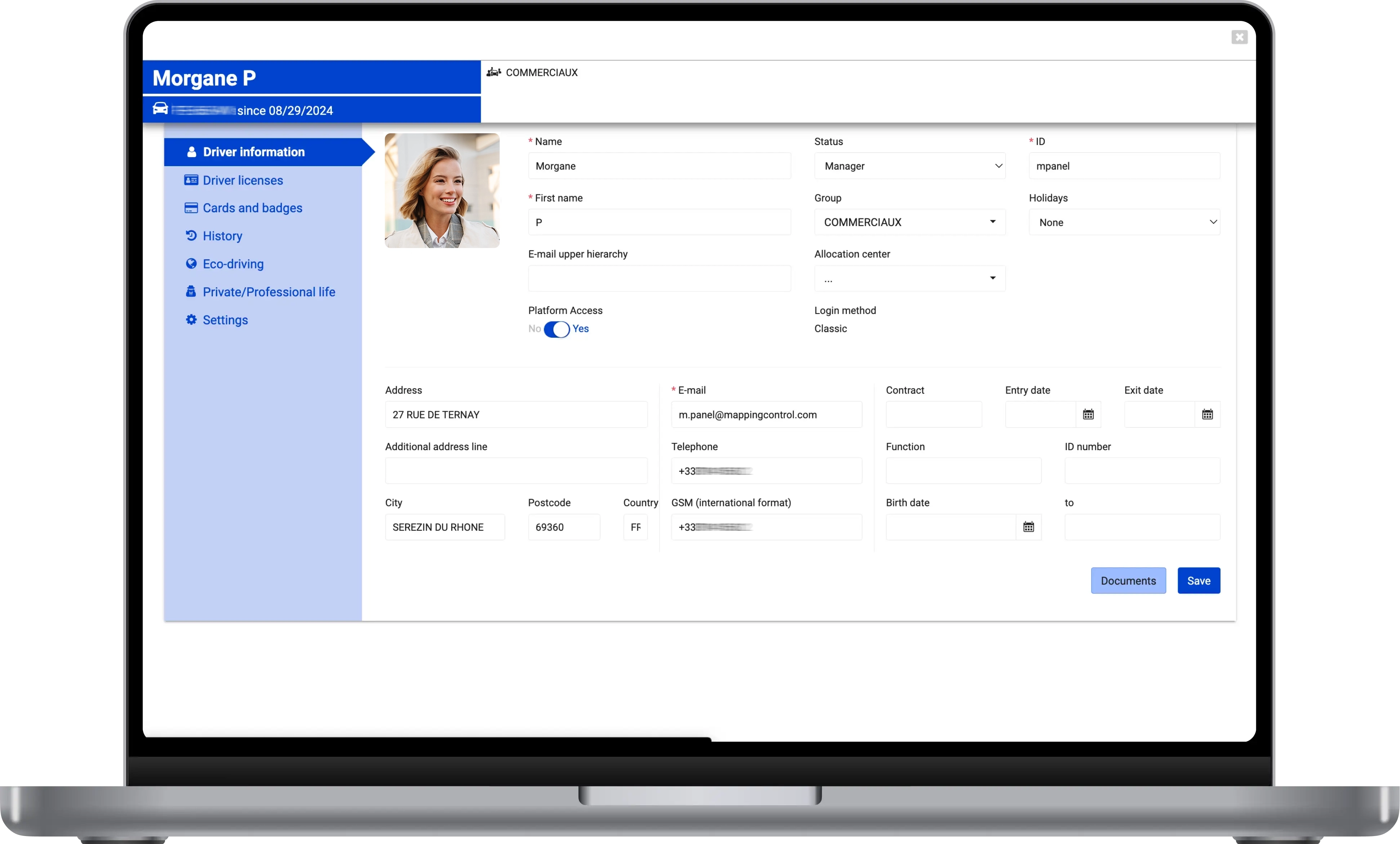
Assigning vehicles to drivers
Optimize fleet management while improving driver safety and accountability. Thanks to our platform, you can easily assign each vehicle to a driver over defined periods of time, thus ensuring accurate monitoring of trips. In the absence of prior assignment, the identification of drivers is simplified thanks to various processes (connected accessories or mobile application). This solution allows you to better manage traffic violations, encourage more responsible driving and optimize the use of your vehicles.
Allocation of vehicles to drivers
Analysis of driving behaviors
Allocation of fuel cards, electronic toll badges...
Management of private and/or professional uses
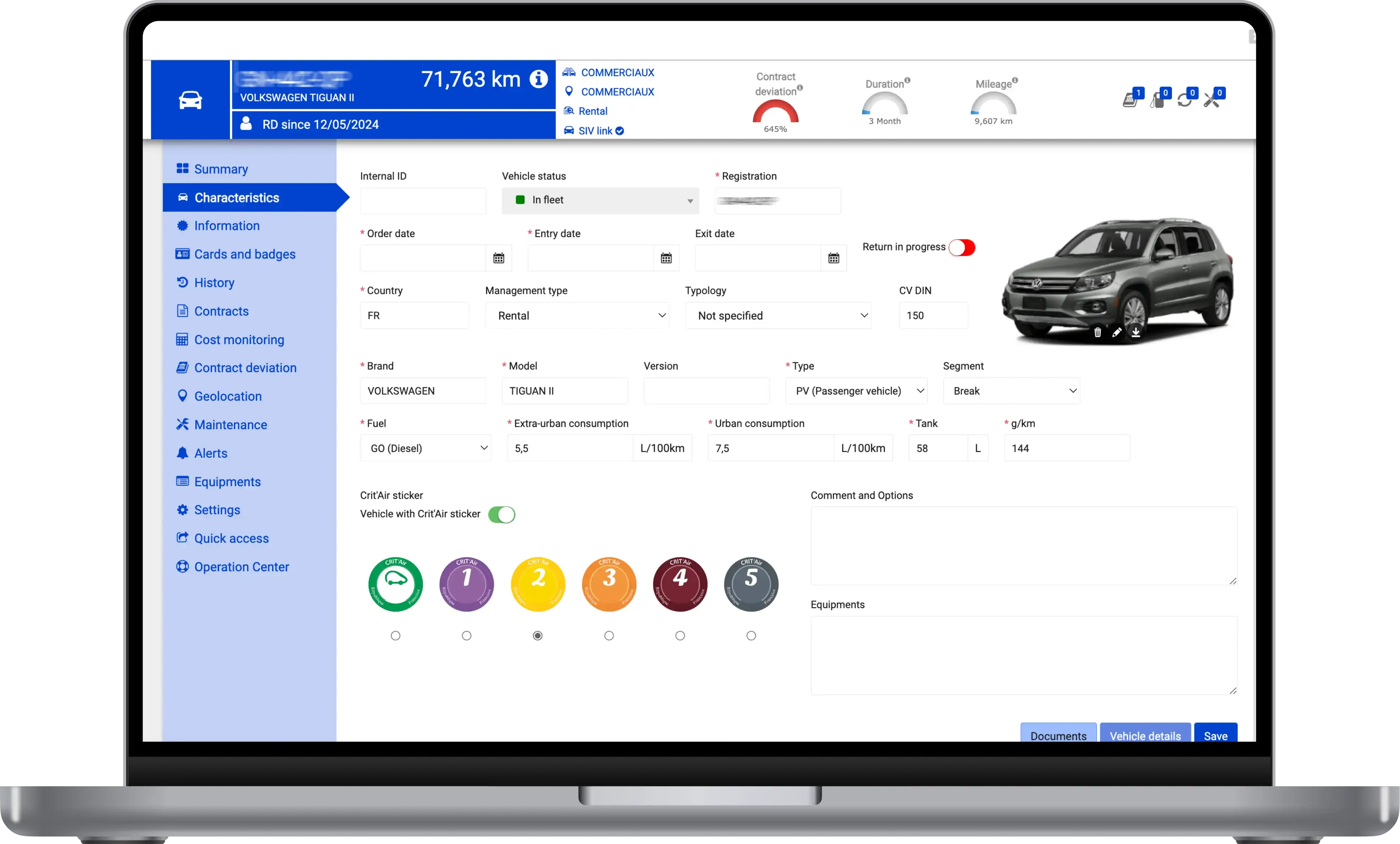
Automated interview management
With the OPTIMUM platform, ensure the optimal maintenance of your fleet with ease. Connected to the maintenance plans of manufacturers, it alerts you, in real time, on upcoming deadlines. Thanks to this proactive management, you extend the life of your vehicles, reduce unexpected maintenance costs and ensure the safety of your drivers.
Connection to manufacturer maintenance plans
Customizing maintenance operations and their deadlines

Protect your fleet with advanced security controls
Get smart alerts at the right time



Take back control of your fleet today
Experience fleet management informed by real-time data.

Frequently asked questions
Why use a geolocation system for my company vehicles?
Geolocation by GPS tracker is above all an act of responsible and far-sighted management: it makes it possible to optimize the management of your Car fleet by reducing fuel, tire, and vehicle maintenance costs. It improves the traceability of interventions, guarantees better reactivity and offers real-time monitoring of your vehicles for increased efficiency. It also makes it possible to secure the vehicles and goods transported (geolocation + remote immobilization of vehicles).
Starting with how many vehicles is it profitable to use a GPS tracker?
There is no minimum number of vehicles required. Even for a single vehicle, the use of a GPS tracker makes it possible to make significant savings. Our customers generally see savings of over 100 euros per month and per vehicle.
Can I install a GPS tracker on a rented vehicle?
Yes, it is possible to equip all types of vehicles, whether acquired through long-term leasing (LLD), medium-term rental (LMD), short-term rental (LCD), LOA or purchased. The installation of a GPS tracker is discreet and reversible, has no impact on the vehicle, and does not require the agreement of the lessor or the financing organization.
Our official approvals with car manufacturers also allow us to connect to the telematic boxes, originally mounted on certain models, thus avoiding the installation of a GPS tracker.
How long will it take for my investment in a geolocation system to pay for itself?
Investing in a system of vehicle geolocation is generally profitable from the first month thanks to the reduction of kilometers traveled, the optimization of trips and driving behaviors, as well as the elimination of unnecessary or unauthorized trips.
Should I inform my employees that their vehicles are geolocated?
Does geolocation comply with the RGPD and the CNIL?
Our solutions of vehicle geolocation comply with the General Data Protection Regulation (RGPD) and the recommendations of the CNIL. The data collected is secure and is only used for the intended purposes.
In this context, the employer has a legal obligation to inform his employees of the establishment of a system of vehicle geolocation. This information should include the purposes of geolocation, the types of data collected, and the recipients of the data. OPTIMUM supports you in complying with regulations.
How do I access geolocation data in real time?
Our solutions of vehicle geolocation offer an intuitive interface that is accessible 24/7 from a computer, tablet or smartphone. You can visualize the position of your vehicles in real time, generate activity reports and receive alerts in case of anomalies.
What happens if a vehicle is stolen?
In case of theft, the vehicle geolocation allows the vehicle to be precisely located in real time and to immobilize it remotely (optional equipment). This allows you to transmit accurate information to law enforcement for quick recovery. Generally more than 90% of stolen vehicles, equipped with a GPS tracker and an immobilization relay, are recovered within 48 hours.
How do I install a GPS tracker on a vehicle?
Several options are possible depending on the case.
- The vehicle is already equipped with a manufacturer's telematics unit: our official approvals with these allow us to connect to the vehicle remotely. No installation is required in this case.
- You want to equip yourself with GPS trackers to install yourself: we offer OBD boxes or 2-wire battery boxes. In this case, the installation is extremely simple, done by yourself in less than 5 minutes.
- You want to benefit from advanced functionalities: in this case, our technicians travel to your site to carry out the hidden installation of GPS trackers.
What are the prices for geolocation solutions?
Our offers of vehicle geolocation are adapted to your needs, with discounted rates depending on the number of vehicles equipped and the options chosen. But be aware that installing a GPS tracker allows you to generate savings that are much greater than your investment.