

Fleet management software:
manage your fleet, control your costs, simplify your daily operations.
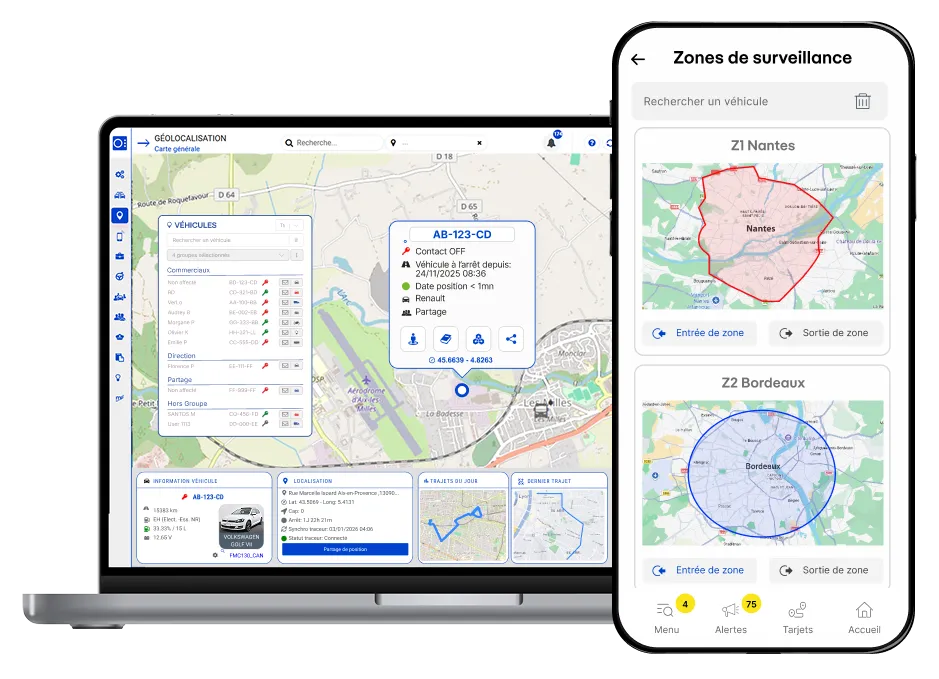
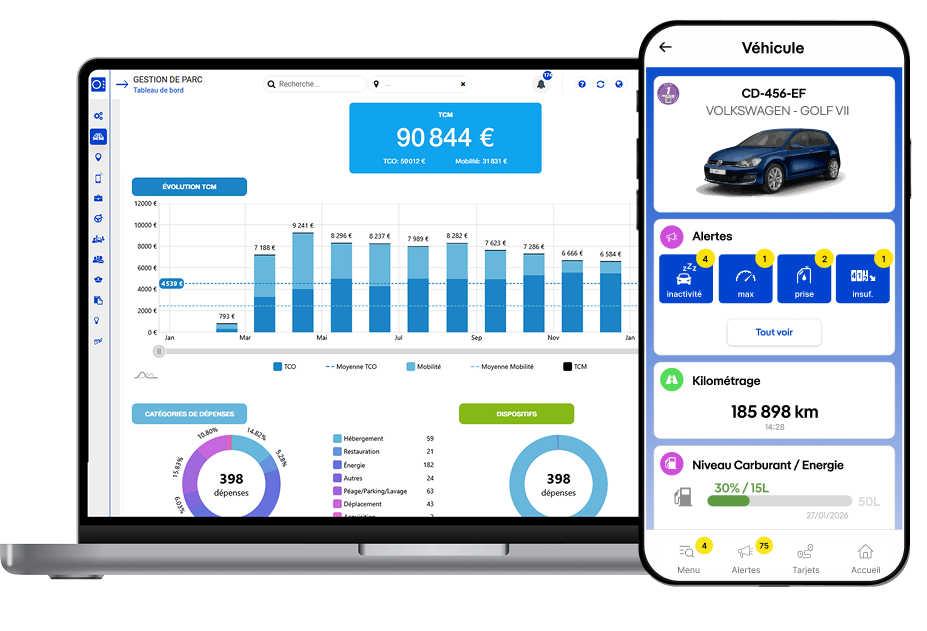
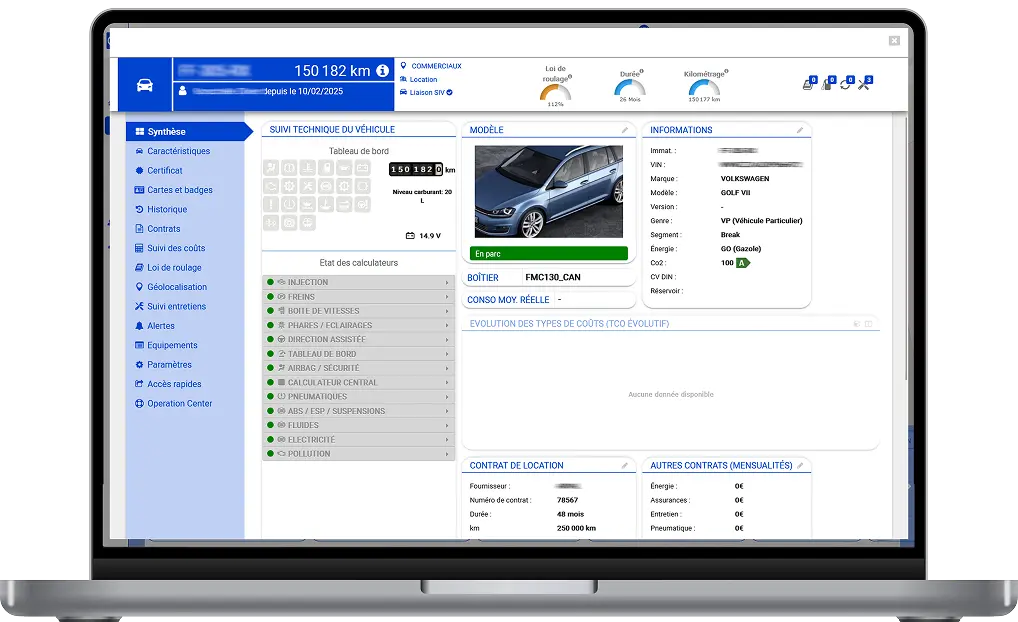
With OPTIMUM, centralize the management of your fleet on a single platform. Vehicles, drivers, costs, maintenance, fuel, traffic violations, telematics data: all the information you need to make the right decisions and optimize your fleet.
Over 8,000 companies and public sector organizations trust us









An expert fleet management solutiondesigned to solve complex challenges
Managing a fleet is not just about tracking vehicles. You need to control costs, contracts, maintenance, mileage, fuel consumption, drivers, traffic violations, taxes, and CO₂ emissions, all while supporting fleet electrification and new mobility trends.
OPTIMUM brings together on a single platform all the tools needed to manage and optimize your fleet from start to finish.
Optimize fleet costs
Reduce carbon footprint
Track and control vehicle usage
Secure vehicles, drivers, and fuel
Maximize your benefits:lower costs, fewer tasks, more control.
Activating Optimum fleet management services delivers tangible results from the very first month. Our clients save an average of €120/month/vehicle*. Why not you?
Here are a few concrete examples* of the benefits:
-10 % average reduction in total fleet costs
-15 % reduction in miles/kilometers driven
Up to 20 %reduction in fuel consumption
-40 % time spent on administrative tasks
90 %stolen vehicles recovered in under 48h
100 % regulatory and administrative compliance
Fleet management software:
Who is it for? Why use it?
Whatever the size of your company, your fleet size, or your industry, Optimum fleet management solution supports you daily to manage and secure your vehicles and drivers, optimize mobile team travel, control costs, and reduce your carbon footprint.
Small & Medium Businesses (SMBs)
Centralize vehicles, contracts, and costs on a single platform that is easy to adopt.
Mid-market & Large Enterprises
Multi-site, multi-subsidiary, multi-driver: Optimum consolidates all key indicators on a single platform.
Public Sector & Local Authorities
Track fuel, ensure route traceability, and administrative compliance.
An all-in-one SaaS fleet management solution to control everything in one place
Discover a fleet management software built to simplify your daily operations and generate real savings. Our software includes exclusive services that form a unique offer in the market.
A complete ecosystem
A unique service offering
Support tailored to your standards


Why choose OPTIMUM?
A single tool to manage financial, administrative, technical, and operational aspects of your fleet.
Connected Data
A modular Solution
Industry expertise since 2006
End-to-end support
Optimize your fleet management today.
Because running a fleet incurs costs daily, reach out to our experts now. An initial fleet audit will assess your needs, define relevant connected services, and determine your savings potential!
FAQ – Fleet Management
What does fleet management software do?
What does fleet management software do?
Fleet management software centralizes vehicle and driver data, automates administrative and technical tasks, and tracks key performance indicators for a vehicle fleet. With Optimum, you can:
- Manage your vehicles and drivers
- Track, analyze, and optimize costs and total cost of ownership (TCO)
- Automate contract and maintenance tracking
- Handle traffic violations and driver designations (ANTAI connection)
- Track and analyze fuel consumption
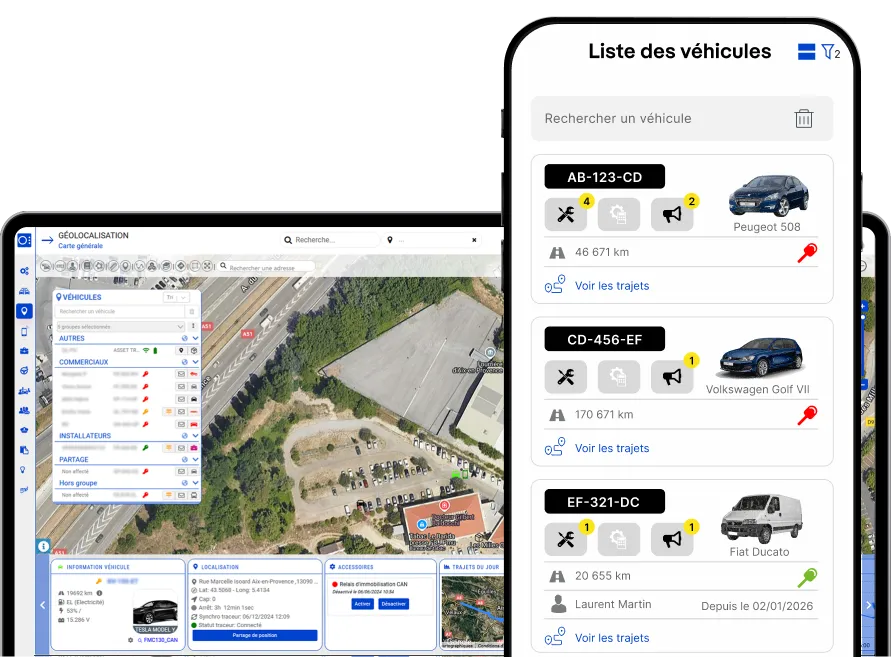
- Geolocate vehicles
- Analyze driving behavior
- Manage trips and assignments
- Generate reports and receive alerts
- Measure and reduce your carbon footprint
- Pool vehicles and trips through carsharing and carpooling
- Support your fleet electrification process
- Immobilize vehicles in case of theft
Why use fleet management software?
Why use fleet management software?
Fleet management involves extensive information and tasks: vehicle tracking, maintenance, contracts, fuel consumption, costs, driver management, trips, traffic violations, and reporting.
Fleet management software centralizes this data, automates repetitive tasks, and provides a full overview of your fleet to simplify the manager's workload and help identify cost saving opportunities.
What features should fleet management software offer?
What features should fleet management software offer?
Needs vary depending on fleet size and business activity. Commonly sought features include vehicle and driver management, cost tracking, maintenance, geolocation, fuel management, trip tracking, alerts, reporting, and driving behavior analysis.
Optimum brings all these services together on a single platform.
How does fleet management software help reduce costs?
How does fleet management software help reduce costs?
Software helps identify major expense categories and optimization levers across a fleet. By centralizing data on vehicles, fuel consumption, maintenance, contracts, and usage, managers gain full visibility to address inefficiencies and take corrective action.
Examples: geolocation reduces driven mileage, driving analysis lowers fuel consumption and accident rates, while carsharing and carpooling reduce the overall required fleet size.
How much does the Optimum fleet management solution cost?
How much does the Optimum fleet management solution cost?
Our pricing is flexible and adapts to the specific needs of each business based on fleet size, selected services, and additional hardware.
Why is it cost effective?
- Our clients save an average of €120 per vehicle per month, which easily covers your investment.
- The investment pays off quickly thanks to generated cost reductions. Most clients see real savings within the first month of deployment.
- A tailored solution for fleets of all sizes, from 1 to several thousand vehicles.
What makes the Optimum fleet management solution unique?
What makes the Optimum fleet management solution unique?
Optimum stands out through an exclusive set of features you will not find elsewhere:
- SIV Connection: Automatic retrieval of vehicle details using the license plate number.
- Automated Maintenance Management: Direct sync with manufacturer maintenance schedules.
- Streamlined Fine Management: Direct ANTAI integration to fulfill legal requirements in just two clicks.
- Mobile App: Real-time alerts and tracking for both managers and drivers.
- All-in-One Platform: Geolocation, fleet tracking, driving analysis, carsharing, carpooling, cost tracking, fine management, carbon footprint reduction, and road risk prevention. Everything is in one place without needing multiple vendors, tools, or subscriptions.